
Wedding Rehearsal Made Easy: A Practical Playbook for Mississauga Couples
Planning a smooth wedding rehearsal is the single most effective way to reduce stress and keep your celebration running on time. If you’re hosting in Mississauga or the GTA, especially at a flexible space like Palacio Event Centre (3410 Semenyk Ct, ON L5C 4P8), this step-by-step guide shows you exactly how to structure a 60-minute run-through, confirm roles, test audio-visual, and plan a relaxed dinner afterward. Whether you’re using the Grand Ballroom with 23 ft ceilings (divisible into IBIZA A and IBIZA B) or a more intimate room like Arriba, your wedding rehearsal will set the tone for a confident, joy-filled wedding day.
Quick Answer
The best way to run a wedding rehearsal is a focused 45–60 minute walk-through that clarifies roles, cues music, and tests microphones. In ON at 3410 Semenyk Ct, Palacio Event Centre’s team can stage your processional and AV so your ceremony runs exactly as planned. This wedding rehearsal framework keeps everyone calm and on time.
Primary focus: This article is your practical plan for a wedding rehearsal—what to cover, who to involve, when to schedule, and how to avoid last‑minute surprises. You’ll also find local Mississauga tips for parking, traffic, and weather.
What is a wedding rehearsal—and why it matters
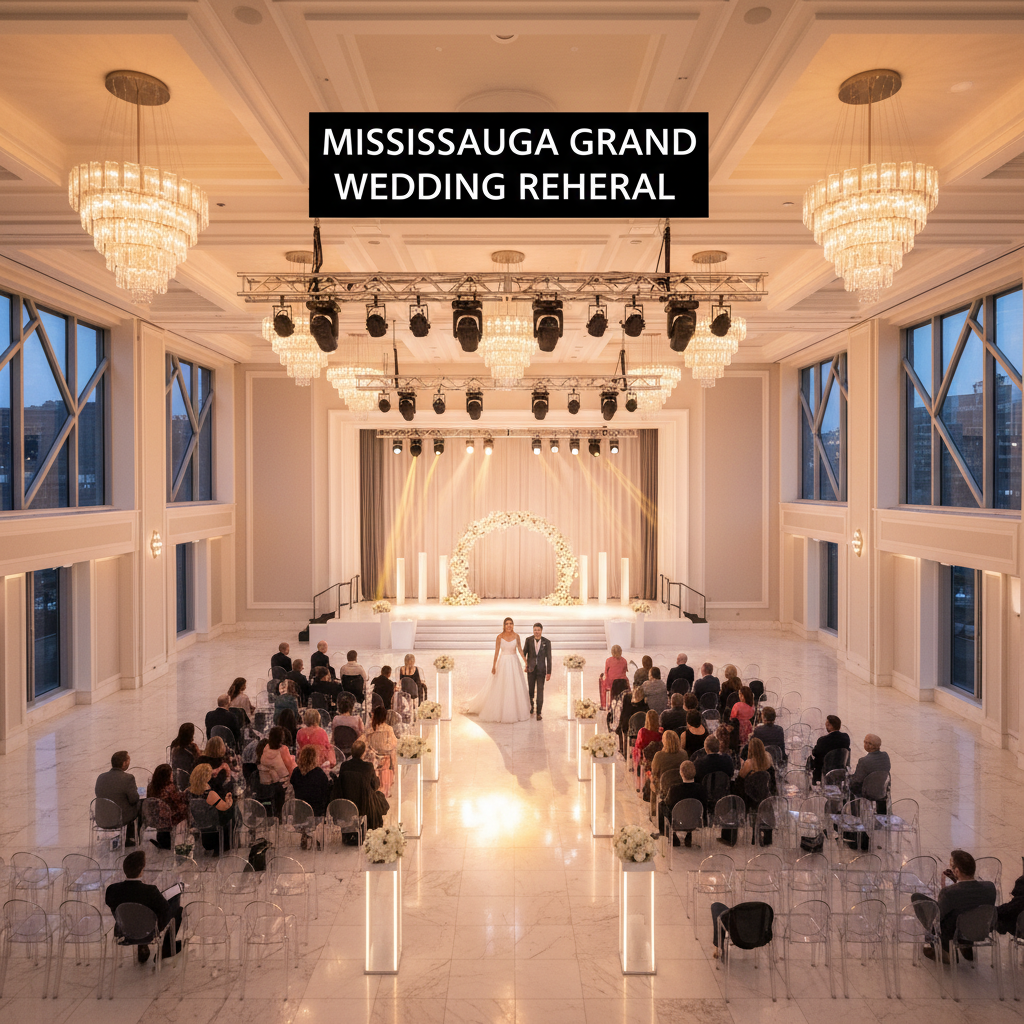
A wedding rehearsal is a short, structured practice of your ceremony flow: processional, readings or vows, ring exchange cues, and recessional. It gives your wedding party a clear mental picture of where to stand, when to walk, how fast to pace the aisle, and how to handle microphones or a lectern. If you’re hosting in a Mississauga event venue with tall ceilings and a stage, like the Grand Ballroom at Palacio Event Centre, a rehearsal also helps you finalize aisle width, lighting looks, and where your officiant prefers to stand for photos.
Local context matters. Mississauga traffic near Mavis Rd, Hwy 403, and Burnhamthorpe Rd W can fluctuate, and winter weather can slow arrivals. A clear, time-boxed plan keeps your timeline intact and your party focused.
The 60-minute wedding rehearsal timeline
Use this compact schedule to run a confident wedding rehearsal in about an hour.
| Time | Focus | Owner | Checklist |
|---|---|---|---|
| 0:00–0:10 | Arrivals & welcome | Coordinator/Venue Captain | Confirm lineup, roles, and microphones; give quick briefing |
| 0:10–0:20 | Processional practice | Coordinator/Officiant | Pacing, spacing, cues, door open/close timing |
| 0:20–0:30 | Readings & vows placement | Officiant/Readers | Mic technique, lectern height, page turns |
| 0:30–0:35 | Ring exchange & positioning | Officiant/Couple | Who holds rings, photo-friendly angle, bouquet hand-off |
| 0:35–0:40 | Recessional timing | Coordinator/AV Tech | Exit song cues, usher release plan, photo moment |
| 0:40–0:55 | Full top-to-bottom run | Coordinator | Do it exactly once as if live, log any last tweaks |
| 0:55–1:00 | Final notes & dismiss | Coordinator | Share meet times, parking, and dinner spot directions |
Pro tip: If your aisle is long (common in a Grand Ballroom), pace at a natural speed—don’t rush. Your photographer will thank you for the clean, centered framing.
Who attends—and who leads—the rehearsal
Keep the group focused and small. Invite the couple, officiant, wedding party, parents/guardians, readers, ushers, ring bearer, and flower girl. Your coordinator or venue captain should lead the rehearsal. If you’re working with Palacio’s planning team, designate a single point of contact to call cues and keep time.
Officiant and ceremony script
Share the final script with your officiant a few days prior. At rehearsal, verify where the officiant stands for photos, mic type (handheld, lavalier, or lectern), and any traditions (unity candle, glass breaking, garlands, or ring warming) so staging is safe and visible.
Wedding party placement
Confirm the lineup, the order of processional pairs, and final static positions. Mark floor spots lightly with removable tape. Taller attendants typically anchor the ends in wide stages like the IBIZA Grand Ballroom; smaller stages can stagger height for symmetry.
Ushers, readers, and family
Ushers should know row counts, reserved signs, and how to seat late arrivals. Readers should practice with the actual microphone at the lectern. Parents and grandparents get a private cue so photographers can frame these moments beautifully.
Venue and AV checks you shouldn’t skip
Great venues make rehearsal easy because the technical pieces are predictably handled. At Palacio Event Centre, the 23 ft ceilings allow dramatic décor and canopy options, while divisible rooms like IBIZA A and IBIZA B or the Arriba hall give you right-sized acoustics. Use rehearsal time to finalize staging and audio-visual details:
Sound and microphones
- Test all microphones: officiant, readers, and any live musician inputs.
- Set default volumes and confirm a backup mic with fresh batteries.
- Practice handing off the mic to a reader; avoid cable clutter in photos.
Lighting looks and sightlines
- Confirm your ceremony “look” (front wash vs. spotlight) and adjust dimmers.
- Stand in the back row to ensure everyone can see; raise the lectern if needed.
- Plan where the couple will turn for ring exchange so photographers have a clean angle.
Music cues and back-of-house flow
- Load tracks onto a single device with a wired backup; label each cue clearly.
- Rehearse door timing: when to open, when to start the track, when to send the next pair.
- Walk the “backstage” route so the party can reset without crossing the aisle.
Rehearsal dinner vs. welcome party vs. final walk-through
Many couples bundle these ideas together, but each has a distinct purpose. Use this comparison to decide what you really need.
| Format | Primary Goal | Typical Guests | When | Food Style |
|---|---|---|---|---|
| Rehearsal Dinner | Thank key people and relax post‑practice | Wedding party, immediate family | Same evening as rehearsal | Seated or upscale buffet |
| Welcome Party | Mingle with out‑of‑town guests | Wider invite list | Night before the wedding | Stations, small plates, or casual buffet |
| Final Walk‑Through | Logistics-only check with venue | Couple + planner/venue captain | 1–2 weeks prior | No food—just the checklist |
If you prefer everything under one roof, ask about private spaces at Palacio for a small rehearsal dinner following your practice. The team can tailor menus and handle dietary preferences, including Halal and vegetarian options.
Menus and cultural touches that feel like you
Rehearsal meals can be simple and celebratory without overshadowing the big day. Palacio Event Centre regularly supports diverse culinary preferences with South Asian, Pakistani, Gujarati, Middle Eastern, European, and West Indian flavors. If you want the experience on‑site, you can coordinate a light buffet or plated dinner after your run‑through. If guests are spread across Mississauga, consider takeout to nearby hotels and keep speeches short and sweet.
For ceremony traditions—like a South Asian wedding canopy (mandap), garland exchange, or baraat entry—use rehearsal time to confirm spacing, placement, and the sequence of cues. The generous height in the Grand Ballroom makes it easy to stage decor dramatically while keeping sightlines clear.
Mid‑Article CTA: Plan Your Rehearsal Walk‑Through
Want a guided wedding rehearsal that stays on schedule and covers every cue? Connect with Palacio’s in‑house team for a custom run‑sheet and AV check.
Start here: Start planning or contact us via the enquiry form.
Local logistics for Mississauga couples
Mississauga is wonderfully connected, but timing is everything. For evening rehearsals, build a 15–20 minute buffer for traffic along Mavis Rd, Hurontario St, and Hwy 403. In winter, check forecasted conditions and remind your party to allow extra time for parking and coat check. Provide a short map pin and parking notes with your rehearsal invite to minimize day‑of texts.
Local Tips
- Tip 1: If your group is coming from Square One, advise them to exit early to avoid 403 bottlenecks; Palacio Event Centre is off Mavis Rd near 3410 Semenyk Ct.
- Tip 2: Winter rehearsals? Ask guests to arrive 10 minutes early for boot changes and coat check so your run‑through still starts on time.
- Tip 3: For large parties, split arrivals: have readers and parents show 10 minutes earlier for mic and seating checks so you can hit the ground running.
What to bring to your rehearsal
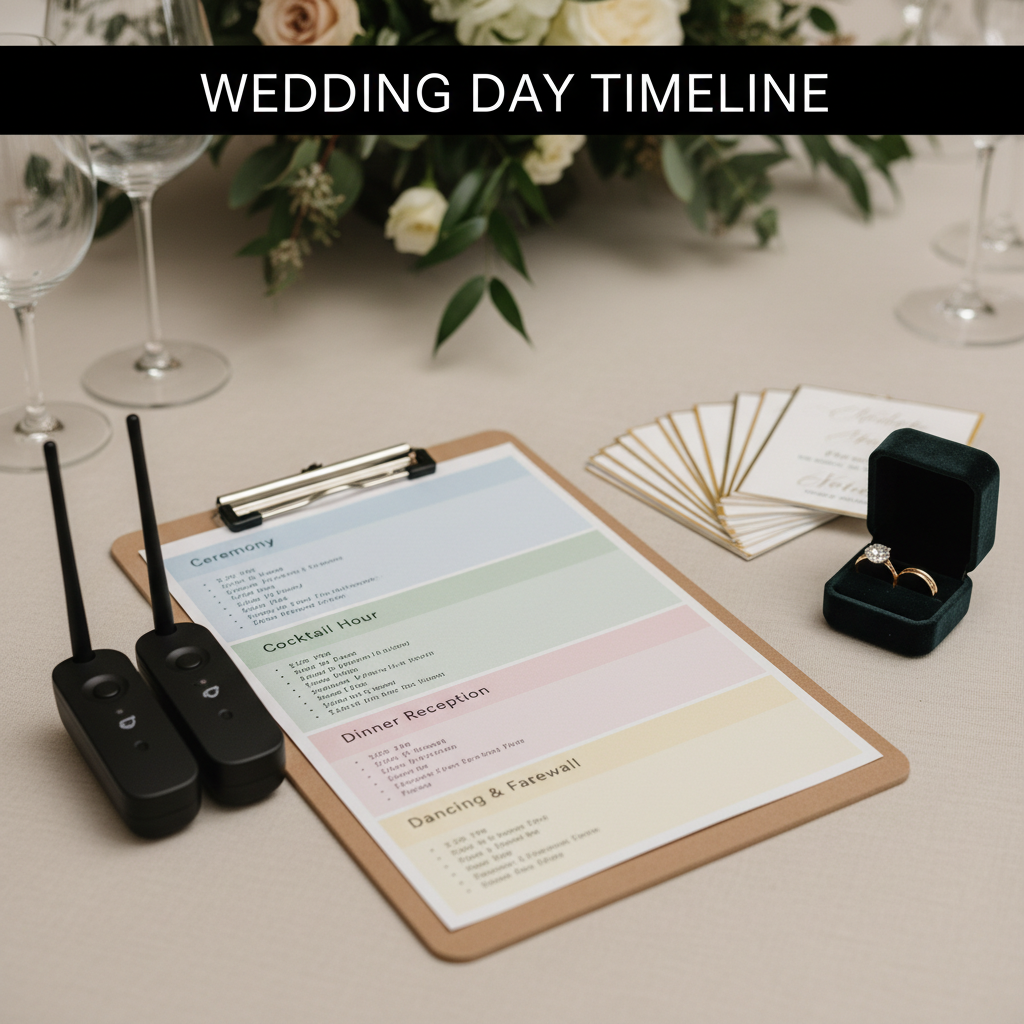
- Printed run‑sheet with lineup and cues (plus 2–3 extras).
- Rings or stand‑ins; ring bearer pillow/box.
- Bouquets or a sample; or use placeholders to practice hand‑offs.
- Music device with tracks + a wired backup; charging cable.
- Any ceremony items: unity set, garlands, signing pens, glass, or readings.
- Seating chart for ushers; reserved row signs.
- Emergency kit: tape, safety pins, tissues, water.
Sample run‑of‑show cues
Use or adapt this cue list to keep your wedding rehearsal consistent with your ceremony vision:
- House to half; aisle doors closed; processional track pre‑cued.
- Grandparents and parents seated; music sting A (short fade).
- Officiant enters; wedding party lines up outside.
- Processional begins: pair 1 … 8; flower girl and ring bearer last; couple entrance.
- Officiant welcome; readers to lectern on cue; mic on.
- Vows; ring exchange; signing (if applicable); family recessional plan ready.
- Declaration; recessional track; couple exits; ushers release rows.
Accessibility, parking, and guest flow
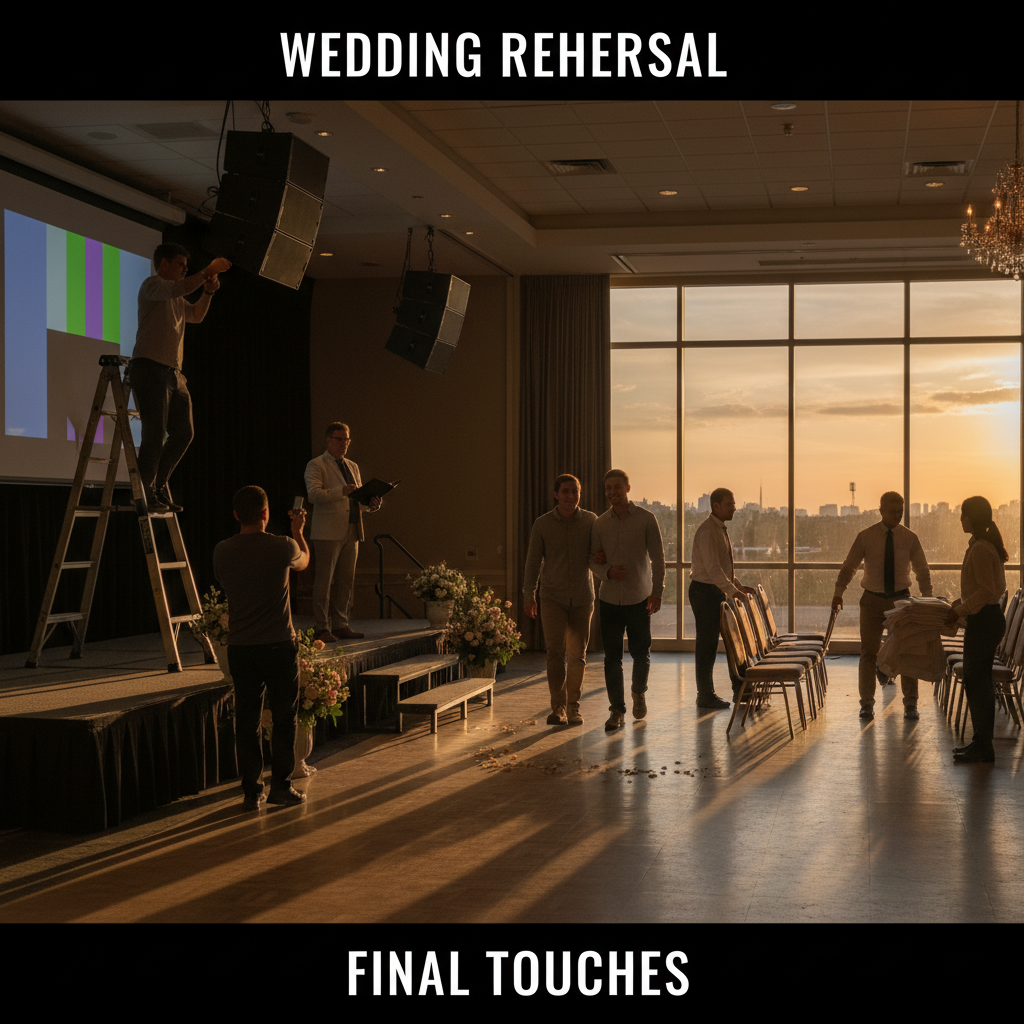
Walk the arrival route your guests will use—from parking to ceremony chairs. Confirm elevator access if anyone uses mobility aids. Place clear signage for restrooms, coat check, and water stations. For large groups in the IBIZA Grand Ballroom, plan two usher teams: one at the doors and one mid‑aisle for balanced seating and faster starts.
Budgeting and scheduling your rehearsal
Most rehearsals run the evening before the wedding, but couples with heavy travel often plan theirs two days prior. Budget for room time, an AV tech, and staff support. If your party is large or your ceremony includes multiple cultural elements, ask your venue for a 75‑minute window. It’s still short and focused, but gives breathing room for mic changes or staging refinements.
Common pitfalls—and easy fixes
Starting late
Send a calendar invite with the exact start time and a 10‑minute early arrival note. Begin on time even if someone is late; you can loop them in during the final run.
Skipping mic checks
Readers need to hear themselves; feedback is preventable. Test each mic and set a default volume. Keep a backup handheld with new batteries side‑stage.
No usher plan
Ushers should know the first two reserved rows by name and how to seat late arrivals quickly without interrupting vows.
Unclear processional pacing
Count a steady beat (about 3 seconds per step) down long aisles. Remind attendants to look up and smile at the mid‑point for the camera.
Where Palacio Event Centre fits in
As a newly renovated event center in central Mississauga, Palacio Event Centre offers flexible halls—from the IBIZA Grand Ballroom (divisible into IBIZA A and IBIZA B, up to 900 guests) to the intimate Arriba hall—plus high ceilings for dramatic staging. Culinary teams can support Halal and international menu packages, with sit‑down or buffet service and outside catering options when requested. If you’re planning a ceremony, rehearsal, and dinner all in one place, the on‑site team can coordinate room flips and manage AV seamlessly.
Explore wedding options, menus, and layouts on the Weddings page, or browse recent stories on the Palacio blog for inspiration and planning ideas.
Case snapshot: a cultural ceremony in the Grand Ballroom
Consider this condensed scenario. A couple hosting a South Asian ceremony chose the IBIZA Grand Ballroom for 300 guests. During the wedding rehearsal, the team staged the mandap under the 23 ft ceiling, tested lavalier mics for the couple and officiant, and practiced the garland exchange with photo-friendly positioning. Ushers rehearsed a dual-door entry plan to seat guests evenly. The result? Ceremony day started on time, audio was crisp, and the grand recessional looked picture-perfect down the center aisle.
Key Takeaways
- A 60-minute wedding rehearsal is enough when you follow a tight cue plan.
- Test microphones, music, and lighting during rehearsal—never on the wedding day.
- Assign a single leader (planner or venue captain) to call all cues.
- Account for Mississauga traffic and winter weather in your arrival buffer.
- Palacio Event Centre offers flexible halls, AV support, and culturally inclusive menus to simplify your plan.
Final CTA: Book Your Walk‑Through
Ready to turn your plan into a confident, camera‑ready ceremony? Schedule a rehearsal walk‑through and AV check at Palacio Event Centre.
Visit Start planning or send a note via the enquiry form to get your date on the calendar.
FAQ: Wedding Rehearsal Essentials
How long should a wedding rehearsal take?
Plan on 45–60 minutes. That’s enough to welcome everyone, run the processional, practice readings and vows, confirm ring exchange positions, time the recessional, and complete one full top‑to‑bottom run. If you have multiple cultural elements or a large wedding party, request 75 minutes.
Who needs to attend?
The couple, officiant, wedding party, parents/guardians, readers, ushers, ring bearer, and flower girl. Your coordinator or venue captain should lead. Musicians or a DJ can join for audio checks but don’t need to stay for the whole time.
Do we need a rehearsal dinner?
It’s optional. A brief, relaxed dinner or welcome mingle helps thank your inner circle and reduces pre‑wedding nerves. Keep speeches short; save the longer toasts for the reception.
What should we bring?
Printouts of the run‑sheet, music device and backup, any ceremony items (unity set, garlands, ketubah, signing pens), reserved seating labels, and a small emergency kit (tape, safety pins, tissues, water).
When should we schedule the rehearsal?
Most couples rehearse the evening before the wedding. If travel is heavy or your party is large, aim for two days prior so everyone is rested and on time.
